

What Is Boarding Up? A Plain Guide for Farnborough
Boarding up is the temporary securing of a broken or unsafe opening with fixed timber board. That opening might be a smashed window, a forced door, a damaged shopfront or a hole in a roof. The board makes the building secure and weatherproof until the glass, door or roof is properly repaired. For a Farnborough home, shop or rental property, it’s the practical step between the damage happening and the permanent repair.
This page explains how boarding up works, what it’s made from, when it’s used and what you should expect to receive. If you need an opening secured now, our phone is answered 24 hours a day.
What boarding up does
A properly fitted board does four jobs at once:
- Secures the opening. It stops anyone getting in through the gap, which matters most after a break-in or when a building is left empty.
- Keeps the weather out. Rain and wind through a broken pane or damaged roof can quickly cause more damage inside.
- Removes the immediate hazard. Loose shards in a frame and glass on the ground are dealt with as part of the job, so the area is safe to be around.
- Gives you time. Glaziers, joiners and roofers often need to measure, order and schedule. Boarding holds the building safe in the meantime.
It’s a make-safe, and that’s its strength: you get a secure building now, and the permanent repair can then be done properly, at the right pace, by the right trade.
How does boarding up protect an opening?
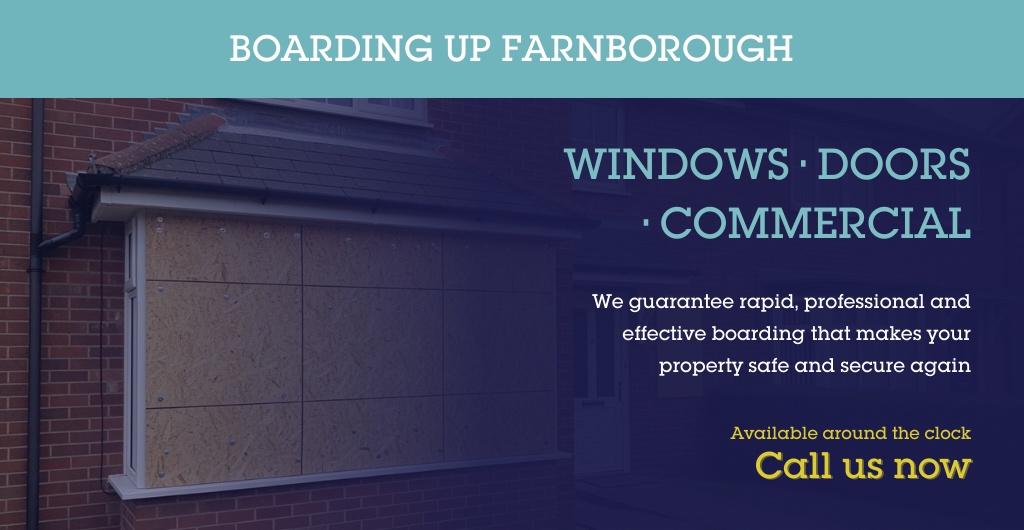
The board is cut to suit the opening. Depending on the frame and the situation, it’s either fitted within the reveal or set to overlap the frame. It’s then fixed into sound structure, not just into whatever happens to be left of a broken window or door. That’s why a board resists being pushed in, levered off or loosened by wind.
On ground-floor and street-facing openings, the fixings matter as much as the board. Security or anti-tamper fixings are harder to remove from outside with ordinary tools, which is what you want on a shop window or the back door of an empty house.
Plywood or OSB: what the boards are made of
There are two common materials, and the choice depends on the opening:
- Exterior-grade plywood, typically 18mm thick, is the standard for most windows, doors and shopfronts. It’s strong, stands up to weather and is hard to break through.
- OSB (oriented strand board) can suit smaller openings where a lighter board does the job properly.
Board thickness affects both the strength of the cover and the quote, so it’s something we’ll talk through rather than assume. The van carries boarding stock and fixings, so most openings can be dealt with on the visit.
Fixings and protecting what’s left of the frame
Where the frame is sound, we use non-destructive fixing wherever it allows. That means securing the board without causing more damage than necessary, so the permanent repair isn’t made harder or more expensive.
This can matter on older buildings. South Farnborough’s conservation area includes late-Victorian and Edwardian cottages, villas and terraces. Along Alexandra Road, some locally listed shops have leaded windows. If original features like these are involved, tell us on the call so the fixing approach can be discussed first.
When a frame is badly damaged, it isn’t always enough to fix into it. A split door frame or a window frame pulled away from the wall may need securing first, or the board may need fixing into the surrounding structure instead. In that case we’ll explain the options before starting, so you know what’s being done and why.
When windows, doors, shopfronts and roofs need boarding
Windows. Broken or cracked glass after a break-in, an accident or storm damage. Ground-floor windows are the usual priority, but upper-floor windows need securing too. See how window boarding works for more detail.
Doors. After forced entry, a door may be split, the frame damaged or the lock broken. Securing the door, frame and lock comes first, then boarding if needed. Our page on door boarding and securing forced doors covers this.
Shopfronts and commercial premises. Large glazed fronts on shops, offices, restaurants and warehouses need boarding sized and fixed for a bigger, more exposed opening.
Roofs and skylights. A broken skylight or a damaged section of roof can be boarded to keep the weather out. Please don’t climb up to check it yourself. Access is something we’ll assess.
Empty properties. Temporary property securing also covers void and vacant buildings, where windows and doors are boarded to deter entry while the property stands empty between tenants, during a sale or before works.
After a fire. Openings are secured once the fire service has handed the site back. Until then, nobody should enter.
What you receive
When the job’s done, you should have:
- The openings agreed on the call, made safe and secured
- An itemised invoice
- Time-stamped before and after photographs
- A written statement of the work carried out
That paperwork is useful if you’re making a claim. Your insurer decides what’s covered, and we’re not loss adjusters, but clear records make the conversation easier. Our guide to insurance claim paperwork explains what each document is for. After a break-in, report it to the police, keep the crime reference number and contact your insurer. Take photographs of the damage only if it’s safe to do so.
How a boarding-up job is arranged
A person answers the phone at any hour, and we attend nights, weekends and bank holidays. On the call we’ll ask for:
- Your postcode, so we can work out an arrival time for your address
- The type and rough size of each opening, and whether any are upstairs or on a roof
- Whether a door or frame is damaged, and whether there’s glass or debris to clear
- Photographs, if you can take them safely
You’ll get a free, clear quote on that call before any work starts. The price depends on the number and size of openings, height and access, the materials and board thickness, the fixing method, whether a damaged door or frame needs securing first and how much glass or debris needs making safe. Our page on how boarding-up quotes are worked out goes through these factors in more detail.
Boarding Up Farnborough is an independent local service with over 10 years’ experience, fully insured (certificate on request) and DBS-checked.
Talk to us about an opening
If you’ve got a broken window, a forced door or a damaged shopfront, or you just want to understand your options, get in touch. Have your postcode ready, tell us what’s damaged and roughly how big it is, and send safe photographs if you can.